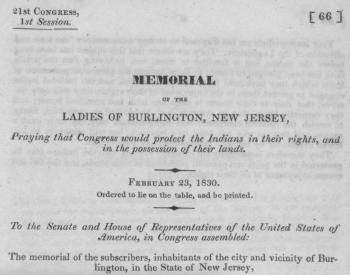
In this lesson, students analyze two petitions by American women and two petitions by Cherokee women to protest Cherokee removal. Though the campaign to stop Cherokee removal failed to prevent the Trail of Tears in 1838, it extended the time Cherokees were able to reside on their homeland, and and American women who opposed removal later used the experience to strengthen the campaign to end slavery. These petitions also offer insight into American and Cherokee women's roles in their societies at the time. Students engage in historical inquiry to answer the question: How did women's arguments against Cherokee removal change over time?
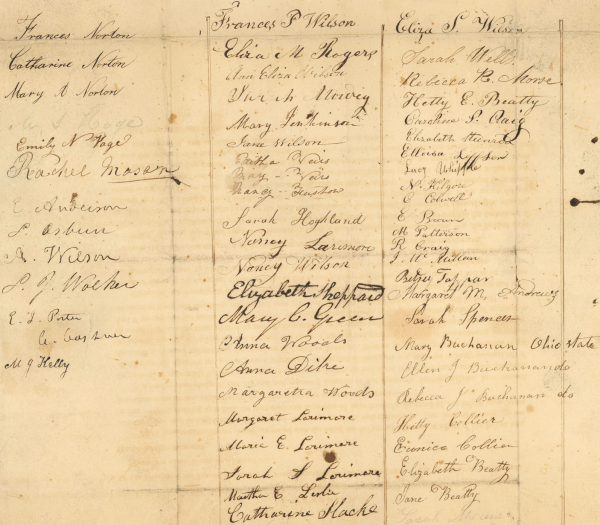
Image: Signatures on an anti-removal petition authored by women in Steubenville, Ohio, in 1830. From the National Archives.