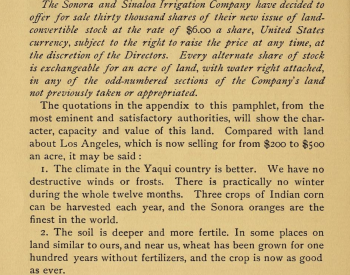
To answer this question correctly, students must see both the strengths and weaknesses of a sworn statement for determining whether the Mecklenburg Declaration was authentic. For Question 1, students should explain that this is sworn testimony in a government investigation from an eyewitness. For Question 2, students should explain that the witness was a resident of Mecklenburg County who may have had a vested interest in promoting the authenticity of the document and was providing a statement to a legislative body who also may have had an interest in establishing the authenticity of the document. The witness was also reporting events that had occurred roughly 50 years earlier, making it possible that he misremembered events in his statement.
Level: Proficient
Question 1: Student explains that the statement may be useful as evidence because it is a sworn statement from an eyewitness to relevant events.
Question 2: Student explains that both the witness and the investigating body may have had a vested interest in the outcome of the investigation OR that the witness was recalling events from roughly five decades earlier, making it possible that he misremembered the events.
Level: Emergent
Question 1: Student sees that the pamphlet provides some evidence of the Mecklenburg Declaration’s authenticity but makes assumptions about the statement that go beyond the warrants of the evidence or does not fully explain how the statement could provide useful evidence.
Question 2: Student sees that the source has limitations but provides an incomplete explanation about why the source is less useful as evidence.
Level: Basic
Question 1: Student does not provide a relevant explanation for how the source could be useful as evidence.
Question 2: Student does not identify or explain the limitations of the source as evidence.